
3 Whites! What’s the difference?

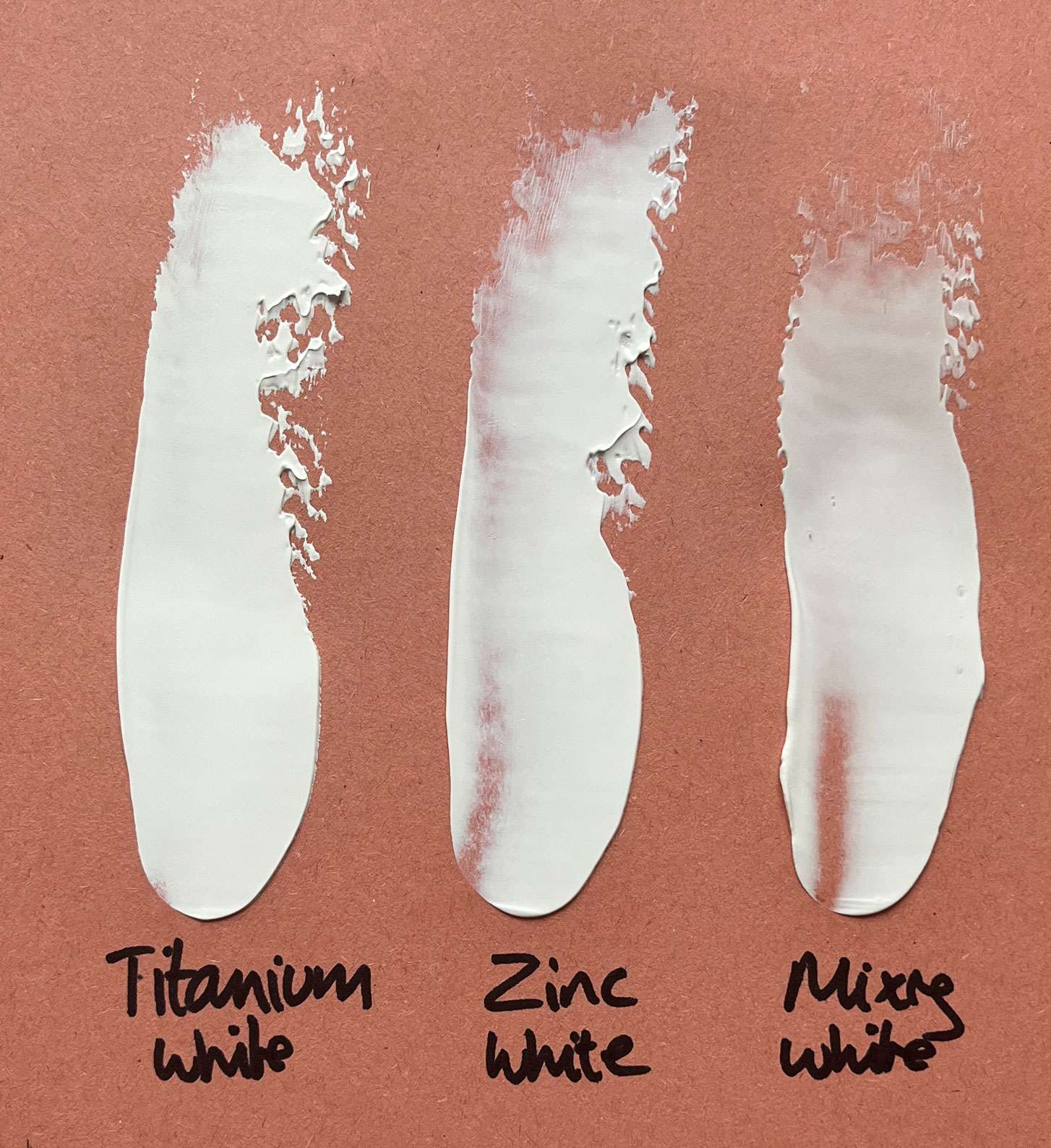
With 3 whites widely available for acrylic artists – Titanium, Zinc and Mixing, I’ve been wondering lately what the differences between them are. So todays short experiment is to find out!
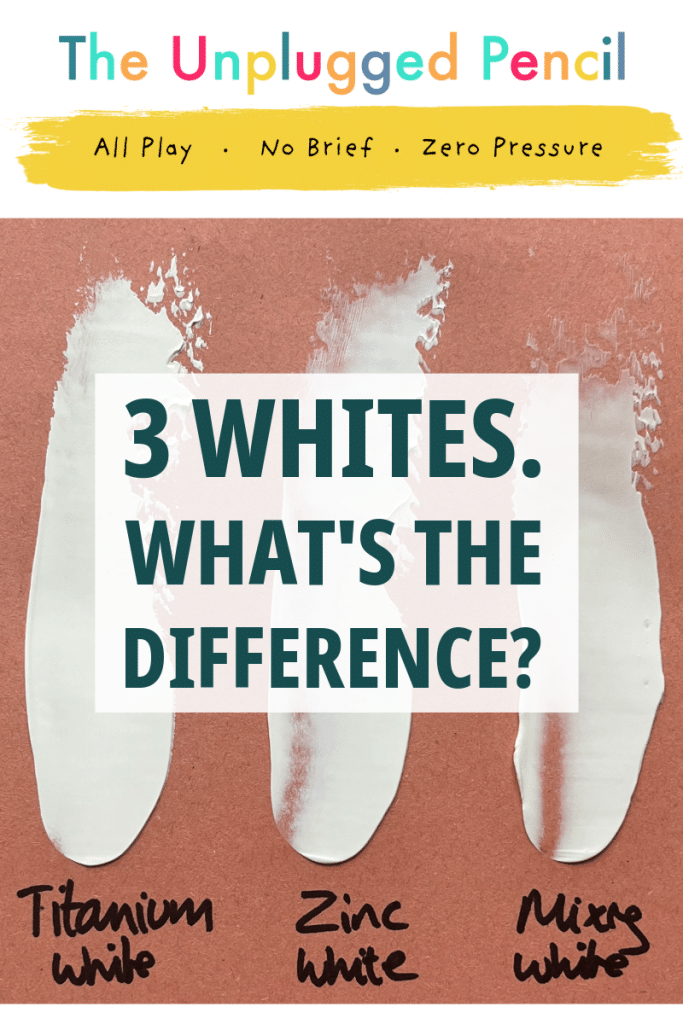
The 3 acrylic whites I will be exploring.
- The most common and probably widely used white (as it comes with most purchasable sets) is Titanium white. According top the Winsor and Newton website:
Titanium White is a clean white pigment. It is the most opaque white pigment and is considered a standard strong white colour.
https://www.winsornewton.com/uk/paint/acrylic/professional-acrylic/?attribute_pa_wn_colour_name=titanium-white&attribute_pa_wn_colour_size=60ml&sku=5012572011594
2. The we have Zinc white. This is a new one for me that I purchased whilst doing Melanies Morris’ fearless landscape course. She used both Titanium and Zinc white. According to Golden acrylics:
Some times referred to as “mixing white” Zinc White provides a more transparent white option for mixing and glazing.
https://goldenartistcolors.com/products/heavy-body-acrylic-color-zinc-white
3. Mixing white. I saw this when I was in The Range and wondered what it was for so I added this to my acrylic collection too. According the the Winsor and Newton website:
Mixing White is, as the title suggests, best for mixing colours as they retain their brightness and maintains the saturation of the colour, creating a subtle change.
https://www.winsornewton.com/uk/masterclass/mixing-white-vs-titanium-white/
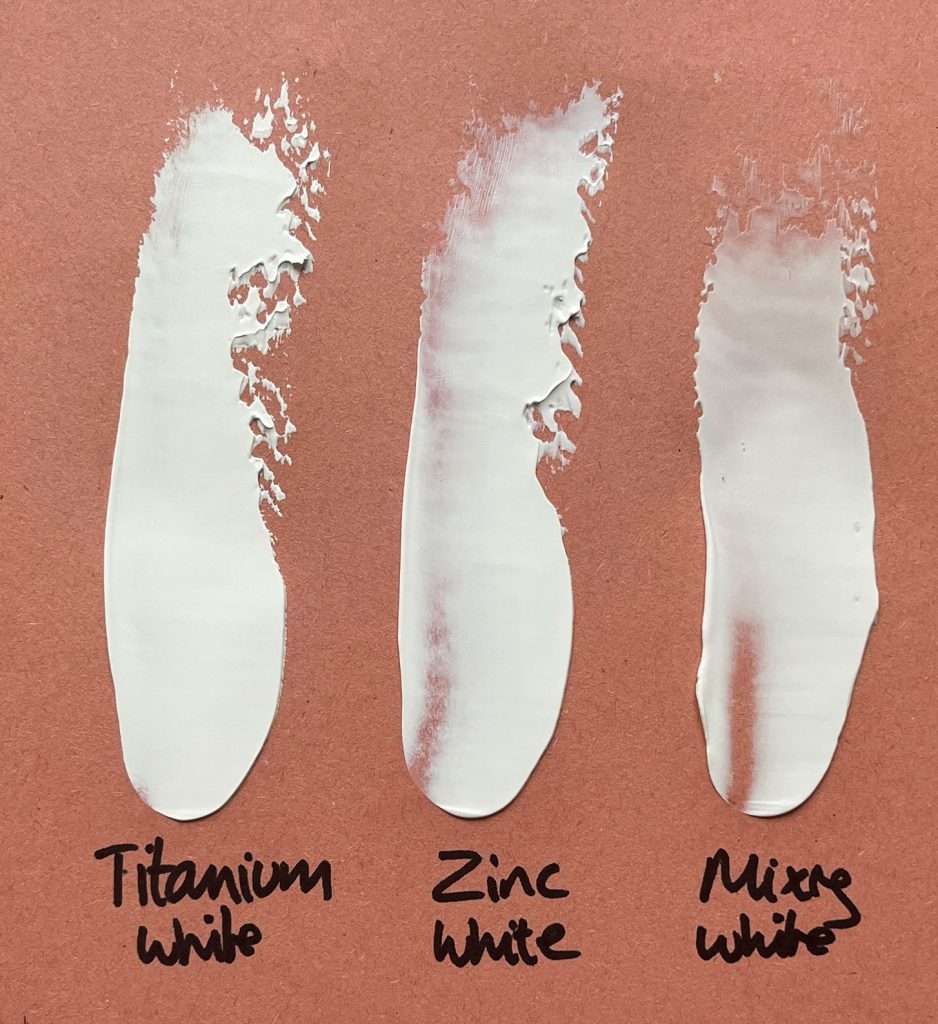
Upon this first ‘plain white’ test you can see that Titanium white is more opaque than the zinc and mixing. I would say the mixing had a slightly odd almost silicon like feel to it.
What do the whites do when mixed with other colours?

Opacity:
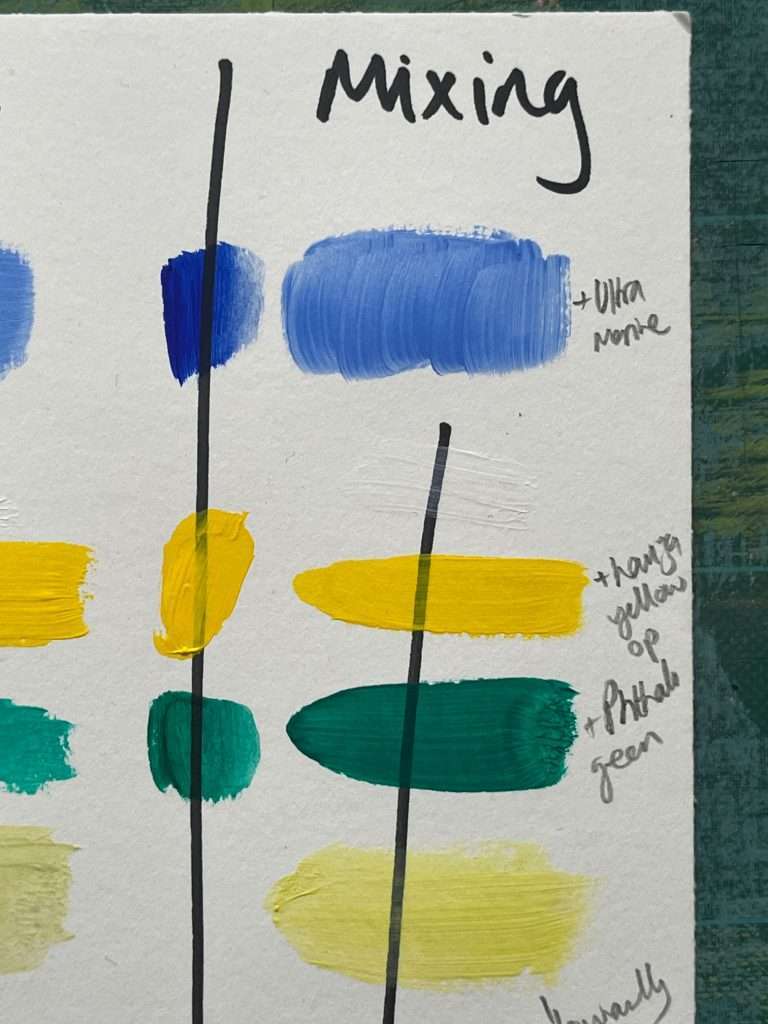
The Titanium white made all the colours more opaque. The original colour is shown on the dividing lines for reference. As you can see all the colours showed the black marker line before they were mixed with anything. Once they are mixed with Titanium they became very opaque.
The zinc white didn’t really alter the original opacity of the colours and the mixing white seemed to make them more transparent.
Colour:
The Titanium white had the strongest colour change, resulting in pastel tints of all the colours. The Zinc white did lighten the colours but perhaps not quite as much as the Titanium. And the Mixing whiteI would say didn’t have much impact on the original colour, it made the paint slightly more fluid to work with almost like a glaze.


Conclusion
An interesting experiment that I’m glad I’ve done, it’s definitely cleared up for me what each white does. The mixing white I felt was more like an acrylic medium than a white. It gave the acrylic a slight lightening but it changed the feel of the paint and gave it a more glaze like quality.
I can see zinc white as being useful if you want a more subtle lightening of your original colour and you want to keep its transparency level.
Titanium white is the one I’m most familiar with but I don’t think I ever really recognised the change in opacity before.
Overall a very quick experiment but a useful one that has deepened my understanding of colour – which is always a good thing!
Thanks for reading xx