Brushes! What brush makes what mark?
Overwhelmed with all the different brush shapes available? In true Unplugged fashion, the best way to get to know something is the get stuck into some free experiments/play. ‘Free’ in the sense that we are not bound by final piece creation, we are free just to play with art materials and tools, who know where it will take us? That’s part of the fun!
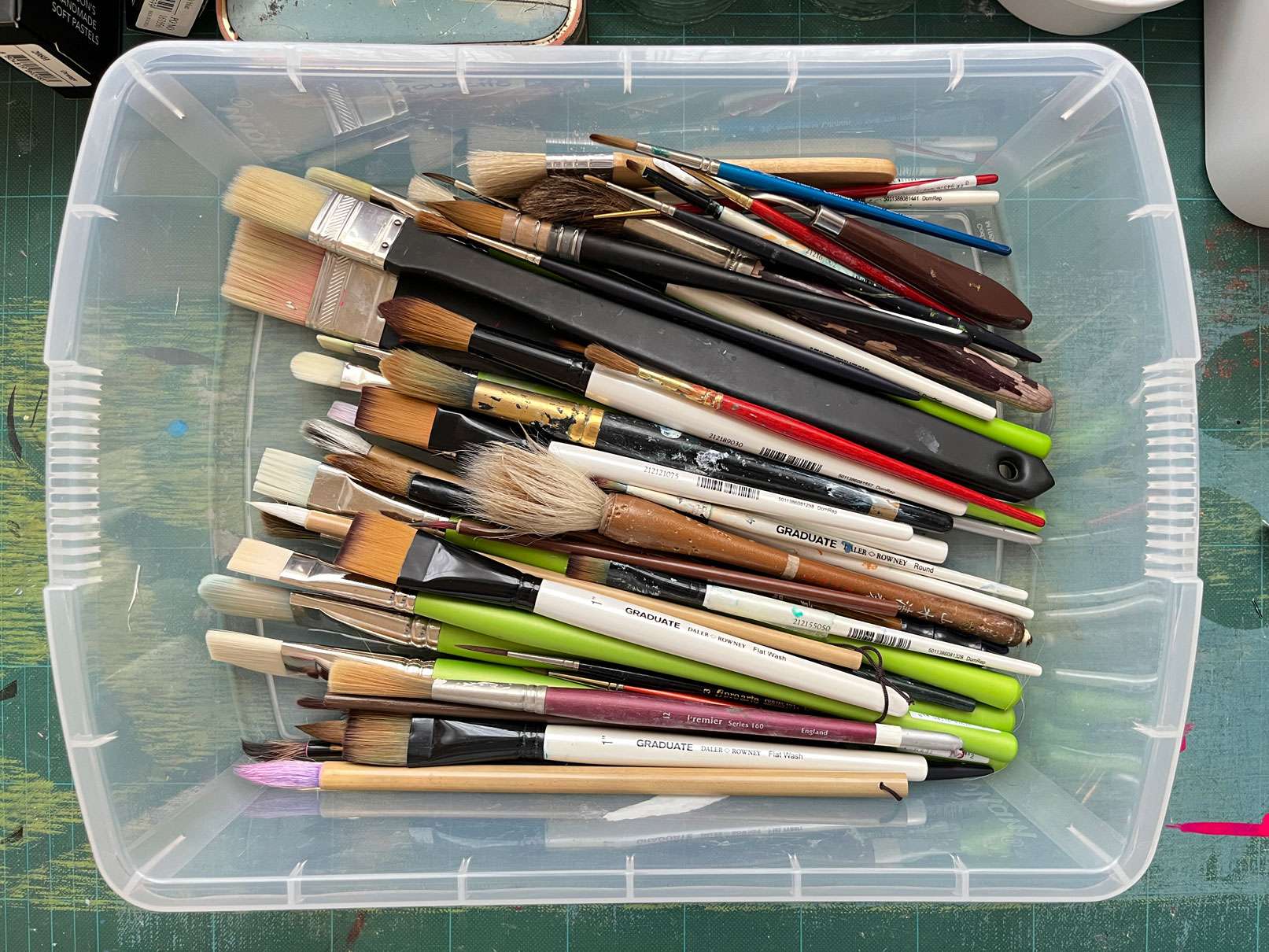
Confession… I have a lot of brushes, and I mean a lot! My Granny was a keen watercolourist so I have inherited quite a lot of her art materials. She had some wonderful Japanese brushes as well as more standard watercolour brushes. Since studying illustration at University nearly 20 years ago I have also amassed my own collection.
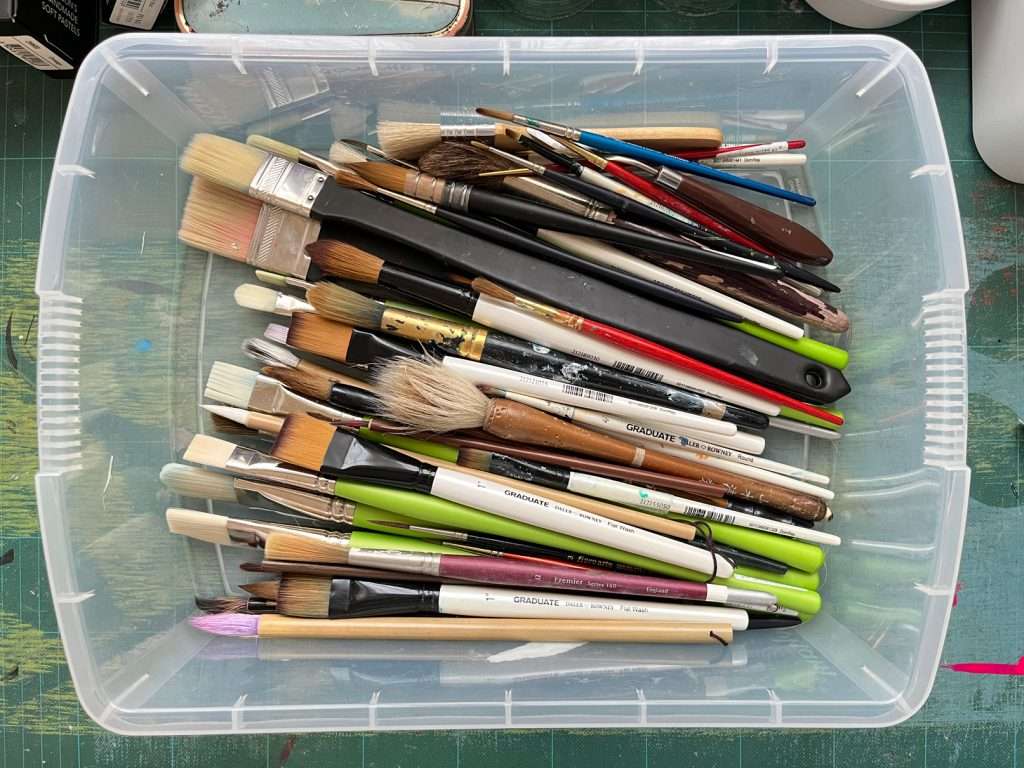
I have brushes for acrylics, oils, watercolours, calligraphy and pottery! But as I don’t paint nearly as much as I would like to (my work is nearly 100% digital), part of my unplugged journey is to re-establish confidence with physical art materials and tools. I’m very much a ‘draw an outline then colour it in‘ type of artist, but I am aiming to create more freedom and expression in my art and I would love to have the confidence to just dive straight in with a paintbrush. This is the start f that journey!
Brush shapes.
This is a very picture heavy post so let’s dive straight in. I will just say that for this post I’m not so concerned with whether the brush is made from synthetic or natural fibres or is meant for watercolours or acrylics. I’m primarily wanting to look at what marks can be made with the different brush shapes.

Flat
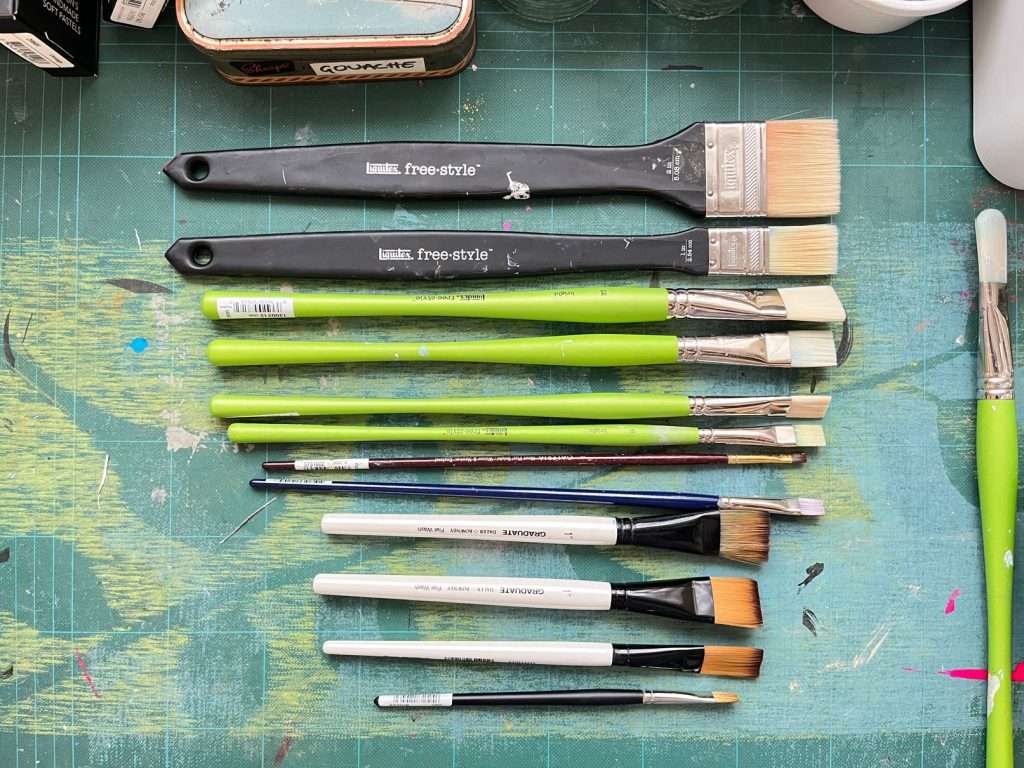
These are also know as wash brushes. The larger ones are great for covering large areas with colour. As they have very square edges you can achieve bold, clean edged marks. They generally have longish bristles that can hold a lot of pigment for long fluid strokes with a solid edge thanks to their squared edge.
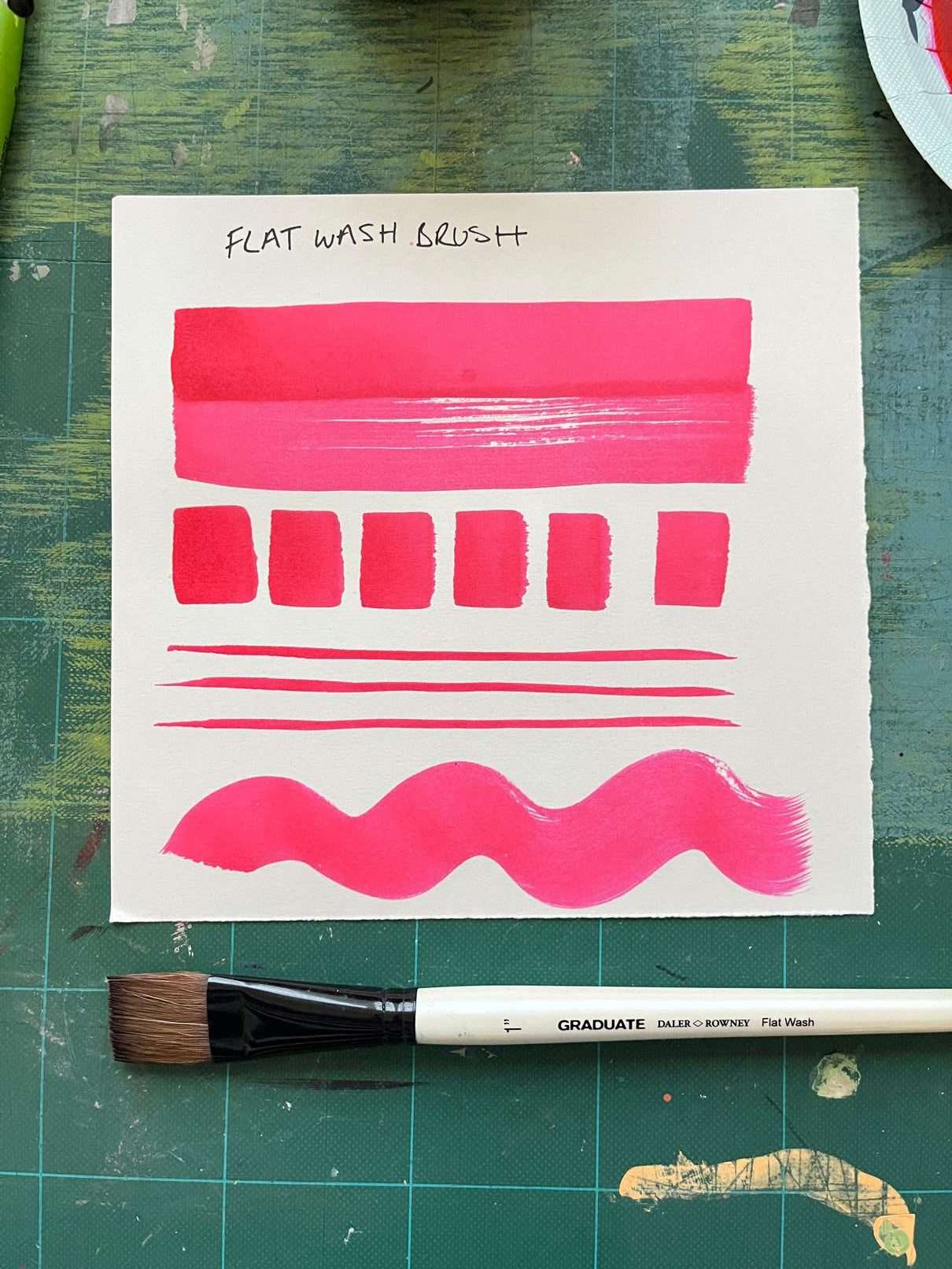
I will just say that these Graduate brushes from Daler Rowney are actually really good. They cost about £3 from places like The Range (UK). They come in many different shapes and sizes. If you are a beginner and not sure which brush shapes you lean to the most, these are a great budget friendly place to start.
Bright

Bright brushes upon first glance look like normal flat brushes but they have shorter bristles. With shorter bristles they generate more resistance on the surface which is great when you want short bold strokes of colour. On the Fearless Landscapes course I did with Melanie Morris, she recommends these brushes.

Filbert

Filberts are flat brushes with a rounded tip. Due to their shape they create a softer edge to the straight edge flat brushes. A favourite for many artists.

Round

Round brushes are probably the most common image that comes to mind when you picture a ‘brush’. They can come with a pointed tip – sometimes know as a quill (shown below) or a more rounded tip which is what most of the above are. These are really great all round brushes that can be used for detail work, washes (the big ones!) and filling in with colour.


Quill or pointed


Special brushes
I’m calling these brushes ‘special’ as the above brushes are the most common brush shapes, these ones (below) such as the liner and the dagger have more of a specific purpose.
Dagger

I bought these to use on my pottery. They are truly wonderful – particularly the large one. It holds a lot of pigment and can create thin lines and big chunky lines. It’s perfect for leaves.

Liner or rigger

With long thin bristles, these are perfect for painting fine lines. After doing the Maru Godas course on Domestika I learnt that she uses these brushes for the branches of trees.

Chinese calligraphy

I did a Chinese calligraphy session in my Welsh lesson (don’t ask!!) it was so much fun learning how to hold the brush correctly and how to use slow movements with varying pressure. Lots of the potters I follow use these brushes so I’m keen to practise with them.

Is that all the brushes?
I think I’ve got the the bottom of my stash! I’m definitely going to do more brush play sessions as it’s an area I feel very weak in.
Thanks for reading xx